At AirAsia, we're taking action to tackle climate change and reduce our carbon footprint with a clear goal to reach Net Zero emissions by 2050.
We all know that travel, like many things we enjoy, leaves an impact on the planet. Here's the good news - together, we can make a difference. From the steps AirAsia is taking to cut emissions to the choices you can make as a traveller, every action counts. Let's explore how we can all be part of the solution.
AirAsia continuously tracks more than 20 operational efficiency measures across our airlines to ensure smarter, cleaner flying. Through ongoing fuel-saving initiatives, we've successfully kept our carbon intensity below 2019 levels.
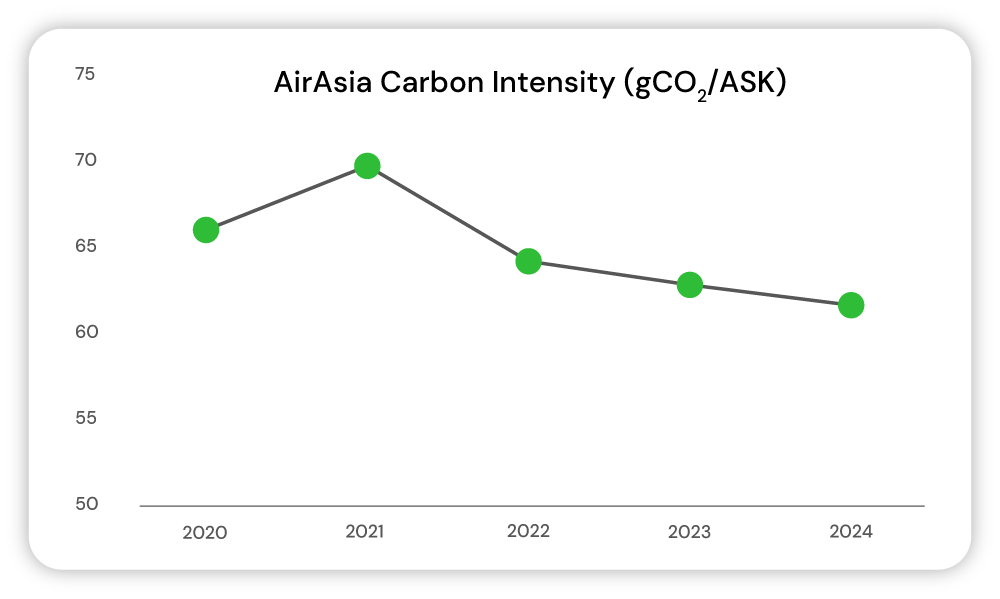
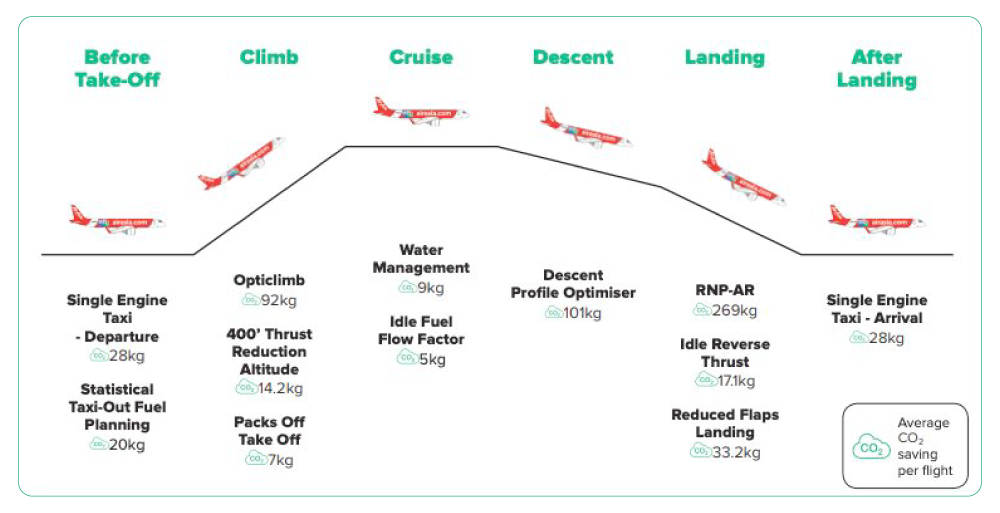
AirAsia implements over 20 fuel efficiency measures to reduce fuel consumption at every stage of flight.

Our on ground decarbonisation efforts are equally as important as those in the air. Initiatives include:
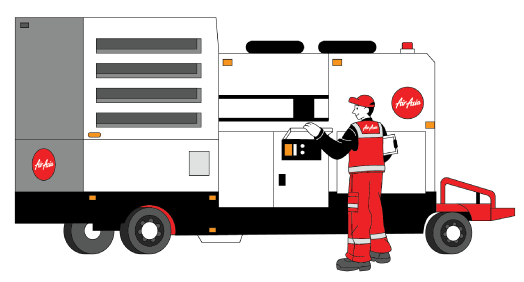 ↓ 20,000 tonnes CO₂ per year
The Combo Units replaces the use of aircraft Auxiliary Power Unit to perform the same functions, leading to a direct reduction in jet fuel consumption and CO₂ emissions generation by 90% at optimal utilisation.
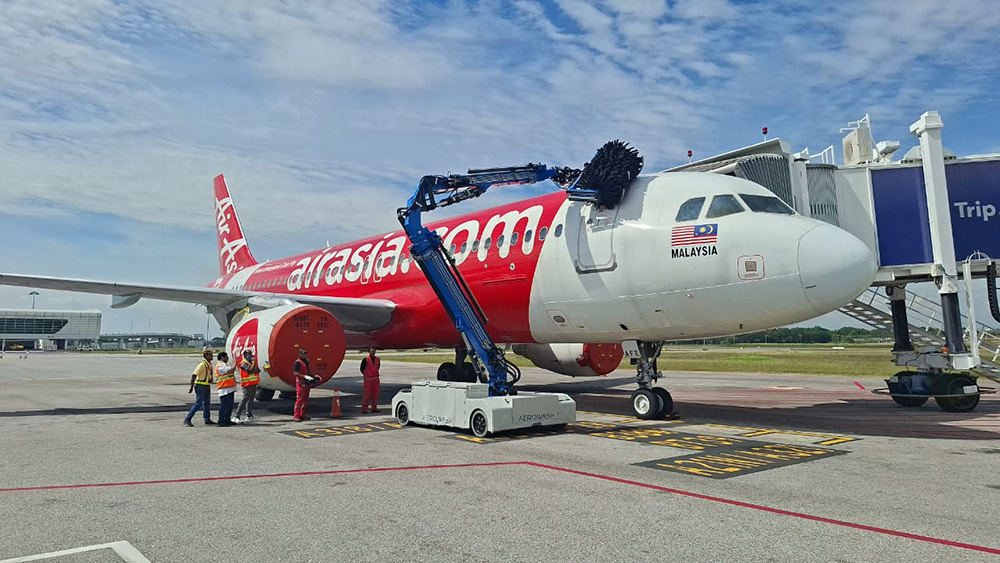
Aerowash is an aircraft exterior dry wash technology using robotic equipment, Aerowash. This innovative system uses a 100% plant-based solution, eliminating the need for gallons of water. A cleaner surface is proven to reduce drag and optimise fuel burn, potentially reducing fuel consumption by up to 1% per flight.
AirAsia's fleet comprises three models of the Airbus A320 family. Our fleet remains relatively young at 11.3 years.

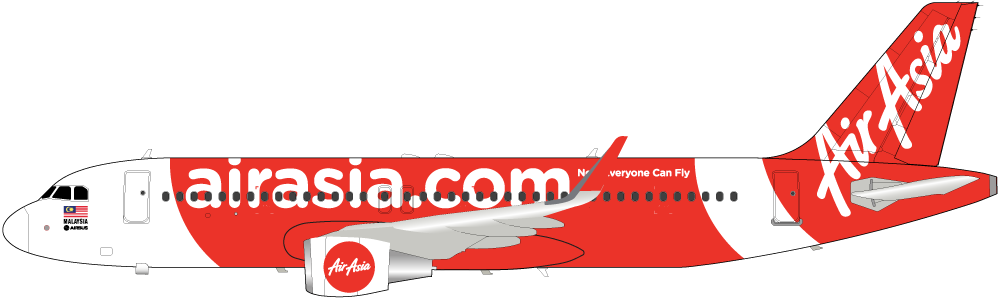
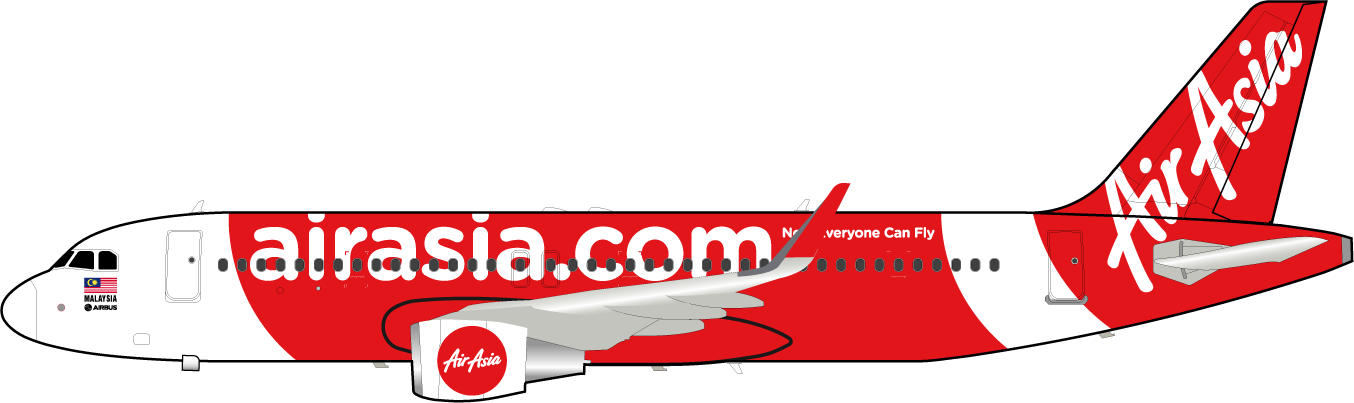
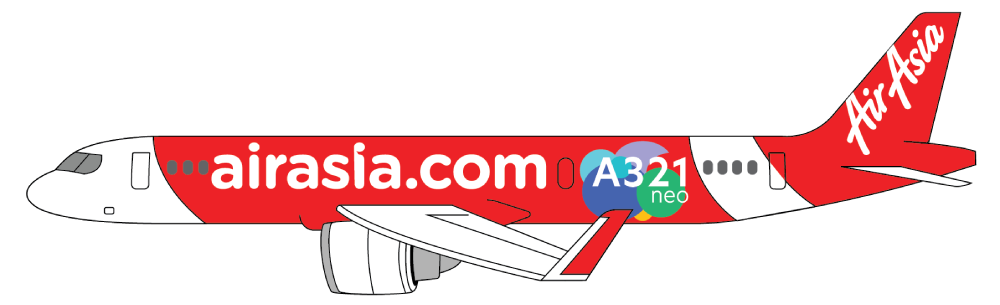
Our fleet renewal strategy aims to fully replace all existing A320 aircraft with A321neos by 2035. Each A321neo features a 236-seat all-economy configuration, enabling a reduction in carbon intensity per seat of at least 20% compared to older models. Further weight reduction is achieved through the adoption of lightweight Mirus seats, saving up to 287 kg per A320 and 375 kg per A321neo.
In 2024, AirAsia added nine new A321neos and one A320 to support both fleet replacement and network growth.
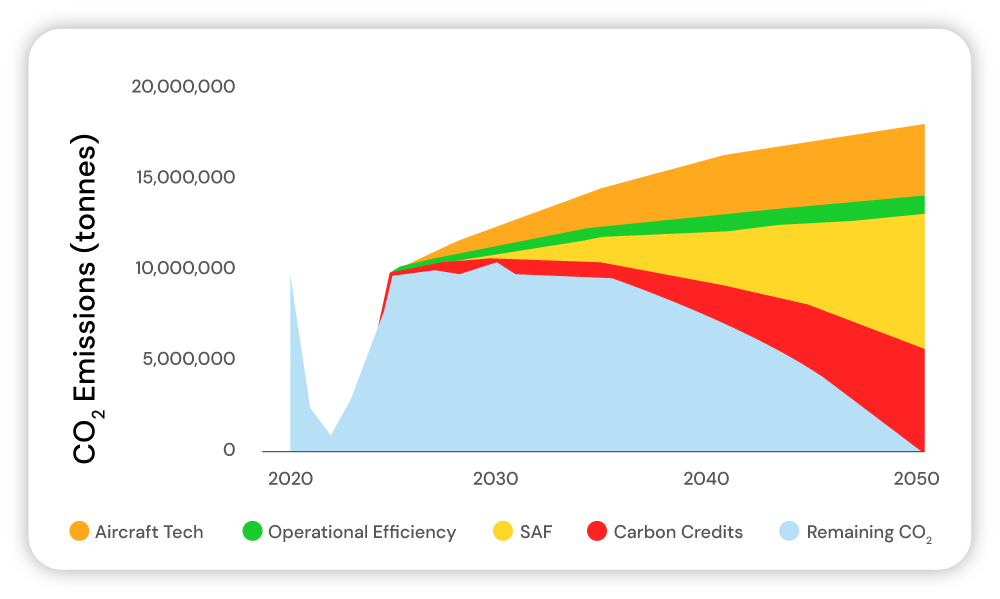
AirAsia is subject to the International Civil Aviation Authority's Carbon Offsetting and Reduction Scheme for International Aviation (CORSIA), to offset residual carbon emissions that cannot yet be eliminated through current technological or operational improvements. Since 2019, our team has adhered to CORSIA's Monitoring, Reporting, and Verification (MRV) requirements. As global emissions from international aviation in 2024 remained well below the 2019 CORSIA baseline level, none of our airlines were required to offset our carbon emissions.
AirAsia plays a key technical role in ICAO's Committee on Aviation Environmental Protection (CAEP) working group on CORSIA, providing critical analysis of global growth scenarios. This enables AirAsia to accurately forecast the airline group's compliance and offsetting requirements based on projected growth through 2030.
Additionally, AirAsia serves as the Chair of Malaysia's CORSIA Task Force, appointed by CAAM, leading efforts to deepen Malaysia's understanding of carbon markets and offsetting mechanisms. AirAsia also developed a net zero model to estimate the potential market size for aviation offsetting within Malaysia and the broader ASEAN region.
We expect carbon offsets to deliver a higher proportion of our emissions reduction at the early stages of our net zero journey before tapering down as in-sector solutions become more accessible.
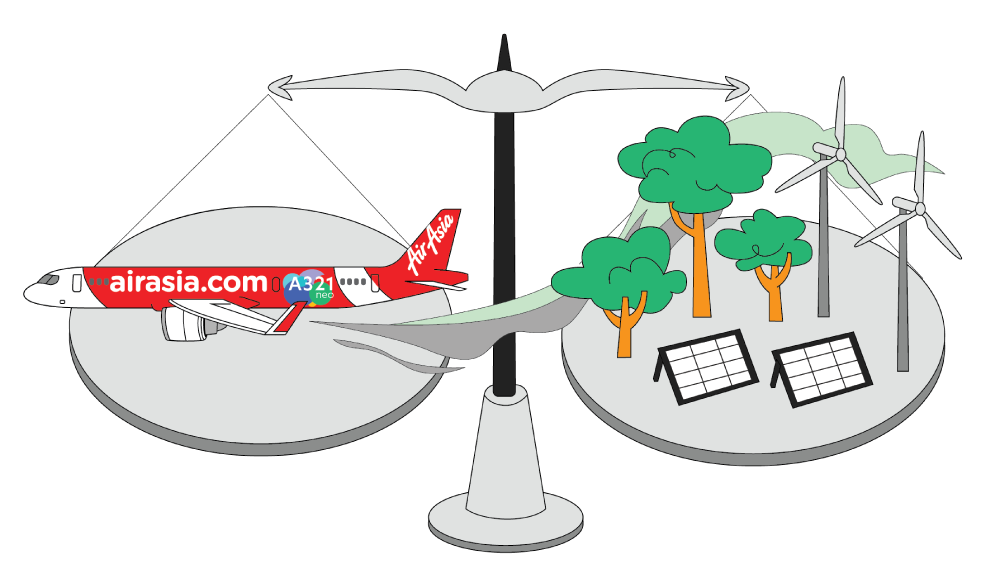
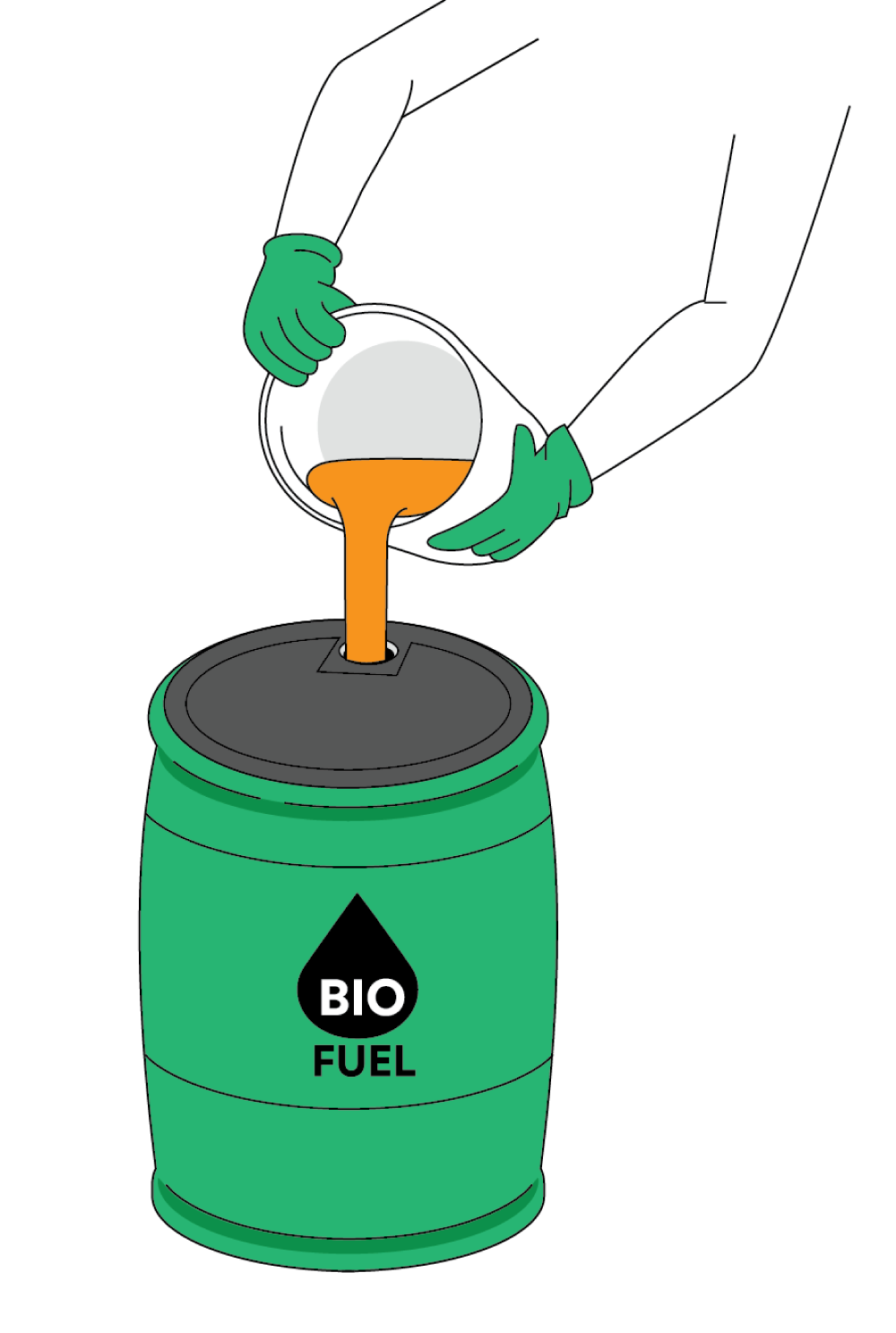
The utilisation of SAF is projected to be the key strategic in-sector solution towards AirAsia's net zero roadmap. We expect that the importance of SAF utilisation will grow in our decarbonisation journey in the long-term as it can cut the lifecycle GHG emissions of jet fuel by up to 80%.
SAF is currently 2-5x more expensive than conventional jet fuel, with limited availability at airports across our operating countries. Feedstock constraints and certification requirements, particularly under CORSIA, add further complexity to adoption.
AirAsia actively collaborates with aviation authorities, fuel suppliers, and manufacturers in Southeast Asia to better understand SAF production and distribution. We are working with Airbus on exploring decentralised SAF production using alternative feedstocks whilst contributing to national SAF roadmap development through technical workshops and industry engagements.
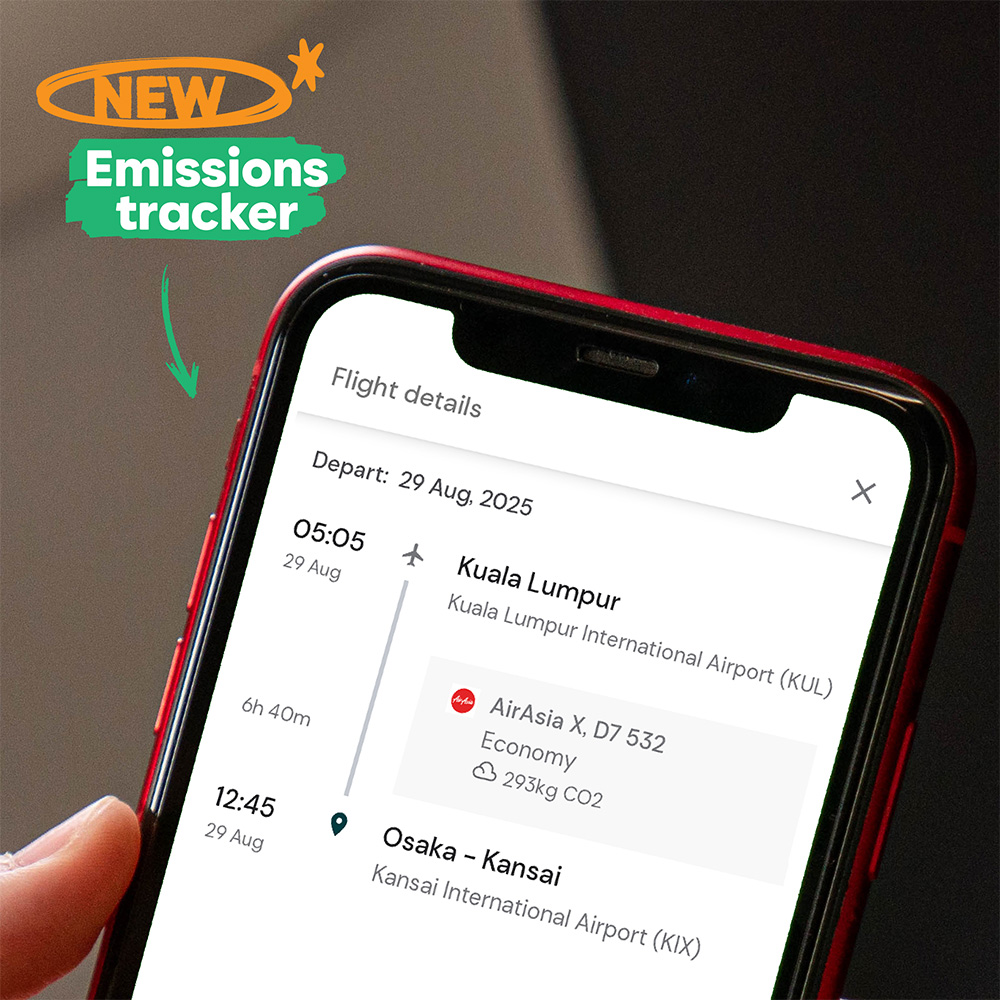
We want to help our guests connect the dots between their journeys and their carbon footprint. When booking on AirAsia MOVE, you can now see the average carbon emissions per seat, so you can make more informed and thoughtful travel choices. Powered by real operational data, this feature is our latest initiative to encourage responsible travel across the region.
We will also be introducing a carbon fee soon to help our guests take account for a part of the carbon emissions produced by their travel.
In order for our decarbonisation measures to be effective, it is essential to have a thorough understanding of our emissions footprint.
(Flight+ground operations)

compared to 2023
(2023: 4,676,564 tCO₂e)
(Electricity)

compared to 2023
(2023: 9,972 tCO₂e)
(Cloud services, jet fuel production, business travel, employee commute, AirAsia services)
compared to 2023
(2023: 179,003 tCO₂)
In addition to greenhouse gas monitoring, we continue to improve efficient management of our resources through various efforts (staggered switching for power intense equipment, scheduled light usage by zone, low-water use facilities).

compared to 2023
(2023: 15,083 MWh)

compared to 2023
(2023: 102,067m³)
We strives to reduce as far as possible all waste generated from our operations. We adopt a circular economy approach in our waste management encompassing the 3R principle to reuse, reduce and recycle resources responsibly.

office waste

lifejackets upcycled into new products since 2017


As part of our commitment to cut down on single-use plastics, Santan has introduced more sustainable in-flight packaging made from polylactic acid (PLA), derived from sugarcane and cassava.